
BY PIERRE LORINET, LORINET FOUNDATION
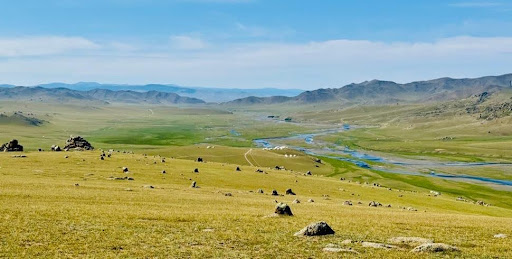
Mongolia, known as the Land of the Eternal Blue Sky, enjoys 250–300 days of sunshine a year. Its vivid skies stretch endlessly over vast grasslands and high plateaus.
This is what greeted us when I recently took six friends on their first trip across Mongolia, which was to combine riding motorbike off-road and discovering the Lorinet Foundation’s (LF) actions in the country.
I have a personal bond with Mongolia—my wife was born here, and I’ve visited for 20 years. Its beauty and wild nature still move me every time, and my friends were captivated by its boundless horizons and ever-changing skies.
We spent eight days riding across steppe, rivers, mountain passes, and sandy dunes, staying in Ger camps (traditional nomadic tents). Beyond its wild beauty, Mongolia’s people left a lasting impression on my friends. It is the world’s least densely populated country, with half its 3.5 million people in Ulaanbaatar (UB), yet about 30% still live as traditional nomads much as they did in the time of Genghis Khan.
Winters are long and brutal, averaging −20 °C and plunging to −40 °C. Living in a ger with an outdoor toilet and herding horses, sheep, goats, and yaks through such cold forges resilience—Mongolians are welcoming, adaptable, and tough.
Our guide Tuk and our support crew were endlessly cheerful, helpful, and fast (they could fix a flat tire in minutes!). The young nomadic couple who hosted us for one night—just 25 and 23—were raising their daughter while tending the family herd. Their spotless ger, simple meals (all organic!), and heartfelt hospitality offered a glimpse of a life both fragile and enduring.


Visiting the Lorinet Foundation Programs
After the ride, we spent two days in UB meeting with LF’s local partners and beneficiaries. LF focuses on the Ger District, a vast informal settlement now home to 50–60% of UB’s 1.5 million residents, formed over the past 30 years as former nomads—driven by climate-related livestock losses or seeking better livelihoods—migrated from the countryside.
In our early childhood development portfolio, we met partners from The Asia Foundation‘s “Let’s Read” programme and OneSky. LF began supporting OneSky in 2020 to help young children from migrant families in UB’s ger districts. What started as a pilot training parents in responsive care is now scaling: in partnership with the government, OneSky is training kindergarten teachers, childcare staff, and orphanage workers—expanding quality early care and strengthening systems to reach far more children.
In our youth portfolio, we visited Zorig Foundation and the Christina Noble Children’s Foundation (CNCF). Both programs help young people build the skills, confidence, and opportunities they need to step into adulthood with independence and purpose.
I was particularly stirred by the CNCF meeting. They run a long-standing program helping juvenile offenders (14–18) reintegrate into society—one that LF recently began supporting to expand and strengthen.
Meeting the team for the first time was deeply moving; their dedication in such a tough environment was palpable. The program has had successes: the around 50–80 youths in the centre at any time now receive age-appropriate schooling funded by the government, and some have gone on to university.
Yet it has long been underfunded, and challenges remain—poor living conditions, little skills training, scarce mental health or family support, deep social stigma, and criminal records that never expire, even for minor offenses, limiting future jobs.
LF’s support aims to address these issues at detention centre, community, and ministry levels, including pushing for legal reforms. Though the group is small (thankfully), changing their life trajectories could be one of our most transformative interventions.


Climate & Conservation
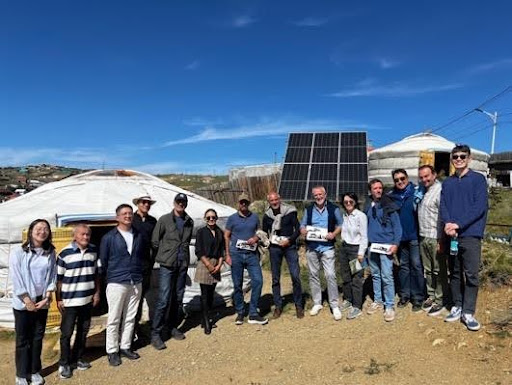
Shifting gear somewhat (no pun intended), we made one last visit during our stay. While not core to LF’s mission, climate change is an issue close to my heart. Mongolia is highly vulnerable but also part of the solution: its grasslands are major carbon sinks.
LF supports The Nature Conservancy’s Eternal Mongolia project, which created the Mongolia Nature’s Legacy Foundation through an agreement between international NGOs and the government. The project has secured $70 million from private donors and about $130 million from the government over 15 years to help Mongolia meet its 30×30 commitments.
A key goal is supporting nomads to improve herding practices. Many have expanded their herds to raise income, but this has led to overgrazing, grassland degradation, and falling productivity, making them more vulnerable to harsh winters. If successful, Eternal Mongolia could protect the ecosystem and reduce the flow of nomads into Ulaanbaatar’s ger district—helping preserve this unique, ancestral way of life under Mongolia’s eternal blue sky.

A Lasting Impression
As I was flying back to Singapore after 12 intense days, I reflected on the trip. This unique experience reminded me that resilience has many forms. On the steppe, resilience is about flowing with nature. In the city, it is about transforming what is human-made—systems, policies, and opportunities—so they better serve people. Both are essential, and both inspire.
The programs we fund and LF’s mission embody this spirit. They are systemic, sustainable, and long-term, designed to shift policies, strengthen institutions, and create opportunities that endure.
Mongolia teaches us that under its eternal blue sky, resilience is not just survival but a way of shaping a future—in harmony with nature and in transformation of society.